
How to Turn Competency Models Into Structured Interview Questions
A competency model can describe what success looks like in a role, yet still leave hiring managers wondering what to ask candidates. Labels such as collaboration, adaptability, and strategic thinking are useful starting points, but they are not interview questions. The real work is translating those labels into observable behaviors, focused prompts, and consistent scoring criteria.
Turning competency models into structured interviews creates a clearer connection between job requirements and hiring decisions. Instead of relying on conversational chemistry, interviewers gather comparable evidence about how candidates have handled relevant situations. Here is a practical process for making that transition.
Translate Competency Models Into Observable Behaviors
Choose the competencies that matter for the role
Start with the position, not the entire competency library. Review the role’s responsibilities, expected outcomes, and common challenges. Then identify a manageable set of competencies that distinguish effective performance in that particular job.
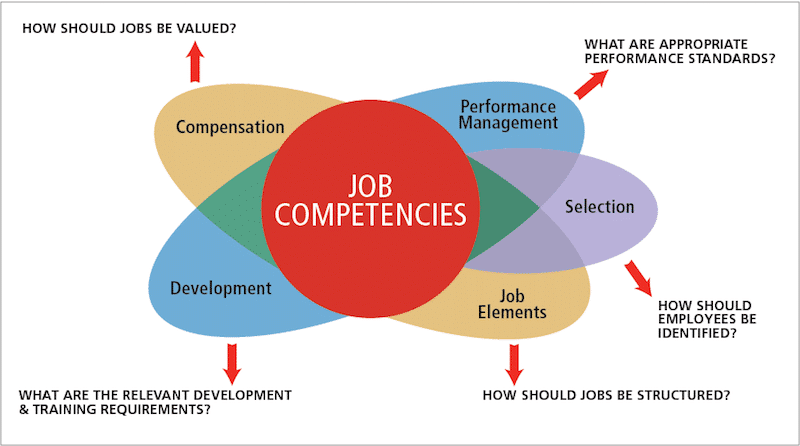
For a project manager, these might include planning, stakeholder communication, and problem-solving. A customer support supervisor might need coaching, service orientation, and sound judgment under pressure. Workitect’s resources on competency models provide a relevant starting point for exploring this foundation.
Confirm your choices with people who understand the work. Ask managers and experienced employees which behaviors make a meaningful difference, especially when deadlines, priorities, or customer expectations collide. Avoid including a competency simply because it sounds desirable.
Define what each competency looks like in practice
Broad definitions need behavioral detail before they can guide an interview. “Communicates effectively” is difficult to assess consistently. “Explains a complex issue in language appropriate for the audience and checks for understanding” gives interviewers something concrete to investigate.
Write each indicator as an action someone could observe. Adjust the expected complexity to the role’s level. An entry-level employee might coordinate a handoff between colleagues; a senior leader might align departments with competing priorities. For terminology and definition ideas, explore Workitect’s competency dictionary resources.
The competency names the capability; the behavioral indicator defines the evidence. Keep that distinction visible throughout interview design.
Build Questions, Probes, and Scoring Anchors Together
Ask for specific examples rather than self-assessments
A question such as “Are you good at resolving conflict?” invites a predictable answer. A behavioral question asks the candidate to describe an actual event, explain their contribution, and discuss the result.
Use a simple construction: ask about a relevant situation, name the challenge, and invite an explanation of the candidate’s actions. The following examples show how competency models can become practical interview prompts:
- Collaboration: “Tell me about a time you needed cooperation from someone whose priorities differed from yours. What did you do, and what happened?”
- Problem-solving: “Describe a recurring problem you investigated. How did you identify its cause and decide what to change?”
- Adaptability: “Walk me through a situation where an important requirement changed after you had started work. How did you adjust your approach?”
Keep each question focused on one primary competency. A prompt that simultaneously tests leadership, analysis, communication, and resilience makes the answer harder to score and leaves candidates guessing about what matters most.
Prepare neutral follow-up probes
Candidates do not always provide complete evidence in their first response. Standardized probes help interviewers clarify missing details without coaching someone toward a preferred answer.
Useful probes include “What was your personal responsibility?”, “What alternatives did you consider?”, and “How did you know the approach worked?” Ask about outcomes, but also examine decisions and actions. A favorable result alone does not establish strong performance; circumstances or other team members may have contributed substantially.
Use the same core questions for everyone applying to the same role. Allow neutral clarification when needed, while keeping candidates’ opportunities to demonstrate competence reasonably consistent. Workitect’s resources on structured interviews can support further exploration of this approach.
Define strong and weak evidence before interviewing
Create scoring anchors alongside the questions, not after meeting candidates. A simple three-level scale can work if each level describes meaningful behavioral differences. For collaboration, anchors might look like this:
- Limited evidence: Provides a vague example, leaves personal actions unclear, or does not explain how differing priorities were addressed.
- Effective evidence: Explains the disagreement, seeks the other person’s perspective, and establishes a workable agreement.
- Strong evidence: Demonstrates the effective behaviors while also anticipating trade-offs, confirming commitments, and checking whether the agreement holds.
Treat these as illustrative anchors, not universal standards. Adapt them to the job and distinguish insufficient information from clear evidence of ineffective behavior. Do not reward polished storytelling more than relevant actions.
Put the Interview Guide Into Practice
Calibrate interviewers and refine the process
Before launch, have interviewers independently score sample responses and compare their reasoning. Differences often reveal an unclear question or an anchor that needs revision.
During interviews, record job-related evidence rather than impressions such as “confident” or “not a fit.” Interviewers should score independently before discussing candidates, helping preserve their initial assessments. Offer appropriate accommodations and avoid questions unrelated to the work.
After a hiring cycle, review whether the questions produced useful distinctions. Replace prompts that repeatedly generate generic answers, and revisit the guide when the role changes. A structured interview is a maintained assessment tool, not a one-time questionnaire.
Build on a clear competency foundation
Workitect Inc. provides competency models, the foundation for connecting role expectations with interview evidence. Organizations seeking a dependable starting point can explore Workitect’s competency-model offerings and discuss how to clarify the capabilities their roles require.
The goal is not a longer interview. It is a more useful one: clear expectations, focused questions, and hiring decisions grounded in observable behavior.
Frequently Asked Questions
How does a competency model support hiring decisions?
A competency model identifies the capabilities and behaviors needed for effective job performance. In hiring, it helps teams select relevant interview topics, define evidence to look for, and assess candidates against consistent job-related criteria.
How do you write interview questions from competencies?
Select a role-specific competency, define an observable behavior, and ask candidates to describe a situation where they demonstrated it. Add neutral follow-up probes and scoring anchors so interviewers know how to gather and evaluate evidence.
How are structured interviews different from informal interviews?
Structured interviews use predetermined core questions and consistent evaluation criteria for candidates applying to the same role. Informal interviews allow more variation in topics and judgments, which can make candidate comparisons less consistent.
What is the best way to score competency-based interview answers?
Use behavior-based scoring anchors established before the interview. Evaluate the candidate’s specific actions, reasoning, and relevant outcomes rather than presentation style alone. Record supporting evidence and score independently before discussing assessments with other interviewers.
Tags: behavioral indicators, behavioral interview questions, candidate assessment, competency models, competency-based interviewing
Related Posts


Recent Posts

In Good Times & Tough Times, You Need Competent People
People. Not money, not buildings, not tools. Competent people are your most valuable resource. And…

What is the One-Size-Fits-All Competency Model?
In the One-Size-Fits-All Approach, a competency model is developed for a broadly defined set of…
Is Your Performance Management System Working?
If it isn’t working, consider a… COMPETENCY-BASED PERFORMANCE MANAGEMENT SYSTEM Many organizations are becoming…

The New Reality: Career Streams vs. Career Ladders
Along with many other changes in how employee performance is managed, there is a…