In every job, some people perform more effectively than others. Superior performers do their jobs differently and possess different characteristics, or "competencies", than average performers do. And the best way to identify the characteristics that predict superior performance is to study the top performers.
A competency is a personal characteristic (skill, knowledge, trait, motive) that drives behavior leading to outstanding performance. An example of a competency is "conceptual thinking", defined as: finding effective solutions by taking a holistic, abstract or theoretical perspective. A person demonstrating this competency would probably be able to:
- Notice similarities between different and apparently unrelated situations
- Quickly identify the central or underlying issues in a complex situation
- Create a graphic diagram showing a systems view of a situation
- Develop analogies or metaphors to explain a situation
- Apply a theoretical framework to understand a specific situation
What is a Job Competency Model?
A job competency model is a description of those competencies possessed by the top performers in a specific job or job family. In effect, a competency model is a "blueprint for outstanding performance". Models usually contain 8-16 competencies with definitions, often grouped into "clusters" along with behavioral descriptors.
Examples can be found in our Competency Portfolio [1.4mb PDF] and in an actual model for Project Managers [84kb PDF]
As an Individual, you can use job competency models to guide your own career development. Coupled with an accurate assessment of your own competencies, you will be able to identify competencies needing development and/or identify other jobs or careers that make better use of the competencies you possess.
As a leader in your organization, competency models and systems can help:
- Improve the selection of people for jobs
- Develop skills and characteristics that lead to improved effectiveness and productivity
- Provide a consistent framework for Human Resource applications
- Build alignment with organizational values and strategy
Competency Framework
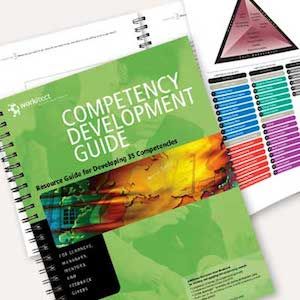
Line executives helped us develop a framework that made sense to them. (Competency Chart). It's simple - Competencies dealing with People, Competencies dealing with Business, and Competencies dealing with Self Management. We have customized this framework and have added or modified competencies for various organizations, but the basic structure and competency definitions are still easily understood by executives and employees at all levels.
Introduction to Competencies Presentation
(3 Hour)
If you want to educate line executives, HR professionals or anyone else to the whole area of competencies, consider a half-day interactive presentation now available for organizations. Topics include: what competencies are, how competency models are developed, and how they can be applied to improve talent management processes including selection, retention, performance management, training, and succession planning.

A six-step model building process is discussed. It is a good overview and orientation to the three day Building Competency Models workshop. The program has been run as part of executive and HR group meetings and conferences. For more details about the program, CLICK HERE.
|
Competency Models |
Consulting Services
For over 30 years, Workitect consultants have helped organizations of all kinds and sizes to develop competency models and competency systems that have resulted in the selection, development, and retention of talented workforces - while significantly improving organizational performance.
To Learn How to Build Competency Models:
We invite you to schedule an on-site program or attend a public session of:
Building Competency Models, a three-day workshop that prepares HR professionals to develop their own competency models without external assistance. As a result of attending this program, participants will be able to:
- Understand alternative methods for building single competency models:
- Understand approaches for building competency models for multiple jobs in an organization
- Plan and develop a focus group for competency modeling
- Conduct Key Event Interviews for competency modeling
- Use the probing strategy of Key Event Interviewing
- Analyze interview transcripts and write job models
Competency Dictionary: 34 Competencies Described [113kb PDF]
Describes in language non-HR people can understand, how to implement competency systems and the payoffs.
Learn About:
Competencies & Competitiveness[459kb PDF] and the ROI of Competency Technology[158kb PDF], and explore the many other resources, tools, and programs available on our website. Or contact us directly for more information.
|
|