
A Unique Practicum in Competency-Modeling

Learn how to build job competency models while building one for your organization
……. with training and consulting assistance from Workitect
The manner in which you introduce and implement the concept of competencies within your organization will determine the effectiveness of your efforts. Installing competency models should be viewed as an organizational change initiative requiring deliberate actions to influence and get buy-in from the organization’s managers as well as incumbents in the positions impacted.
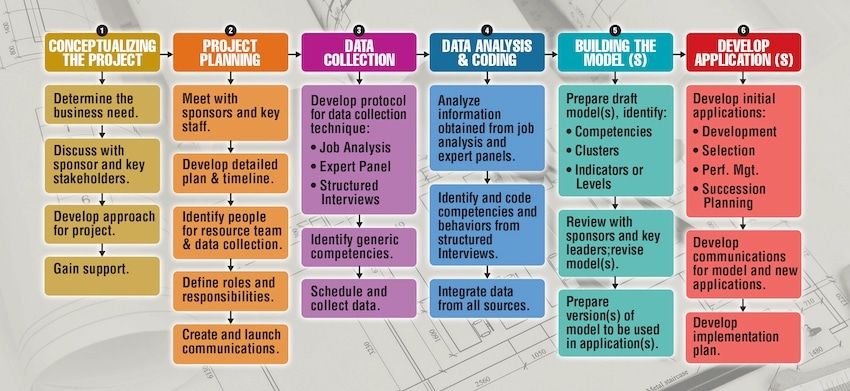
A Workitect consultant will work with you to develop an implementation strategy and plan based upon the needs of your organization, and will guide you through the application of our six-step process for building models.
Overview
- This is a seven-week program consisting of a weekly ninety-minute Zoom meeting led by a Workitect consultant.
- Between each session, there will be 3-4 hours of activities, readings, exercises, and assessments for participants to complete.
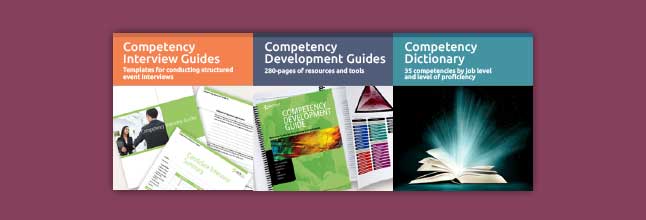
- Materials will include the full 3-day Building Competency Models workshop workbook, contents of the Quick-Start Competency Modeling program, and additional handouts and forms.
- The program can be conducted for one person or for a small team in one organization.
Week 1
Assessing your organization’s situation and needs.
Based upon your situation, plans, and goals regarding competency models, our consultant will work with you to determine the actions needed to launch the development process.
Step 1. Conceptualizing the Project
- Thinking through the business need
- Clarifying the need with the sponsor
- Developing an approach
- Gaining the sponsors support for the approach
- Three approaches to competency model building
Week 2
Step 2 Project Planning
- Stakeholder analysis
- Structure of the project plan
- Planning Worksheet
Week 3
Step 3. Data Collection
- Data collection tasks
- Criteria for Good Model – Job Assessment Process
- Primary data collection methods
Week 4
Step 3. Data Collection – continued
- Secondary data collection methods
- Complete data gathering exercises

Week 5
Step 4. Data Analysis and Coding
- General approach for analyzing data
- Analyzing data from job analysis interviews
- Analyzing data from structured event interviews
- Integrate data from all sources
- Target data exercise
- Coding Exercise
- Analyzing data from resource panels
Week 6
 Step 5. Building the Competency Model
- Select a set of competencies
- Create behavioral indicators
- Identify clusters
- Prepare draft of model
- Review with sponsors
Step 6. Developing Applications
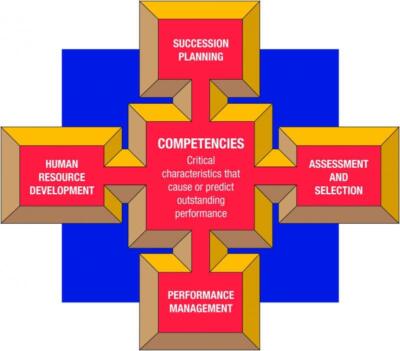
- Professional Development and Training
- Selection
- Performance Management
- Succession Planning
- Other applications
Project Planning (revisited)Week 7
INTERESTED IN THIS PROGRAM? CONTACT US
Obtain a License for Organization-Wide Use
Set of Three Integrated Tools for Selecting and Developing Talent
Low One-Time License Fee, No Annual Renewal Fees


For additional information, call 800-870-9490, email edward.cripe@workitect.com
or use the contact form at Workitect.
©️2022, Workitect, Inc.


Tags: competencies, competency dictionary, competency modeling, competency models, talent strategies
Related Posts
Recent Posts

In Good Times & Tough Times, You Need Competent People
People. Not money, not buildings, not tools. Competent people are your most valuable resource. And…

What is the One-Size-Fits-All Competency Model?
In the One-Size-Fits-All Approach, a competency model is developed for a broadly defined set of…
Is Your Performance Management System Working?
If it isn’t working, consider a… COMPETENCY-BASED PERFORMANCE MANAGEMENT SYSTEM Many organizations are becoming…

The New Reality: Career Streams vs. Career Ladders
Along with many other changes in how employee performance is managed, there is a…