

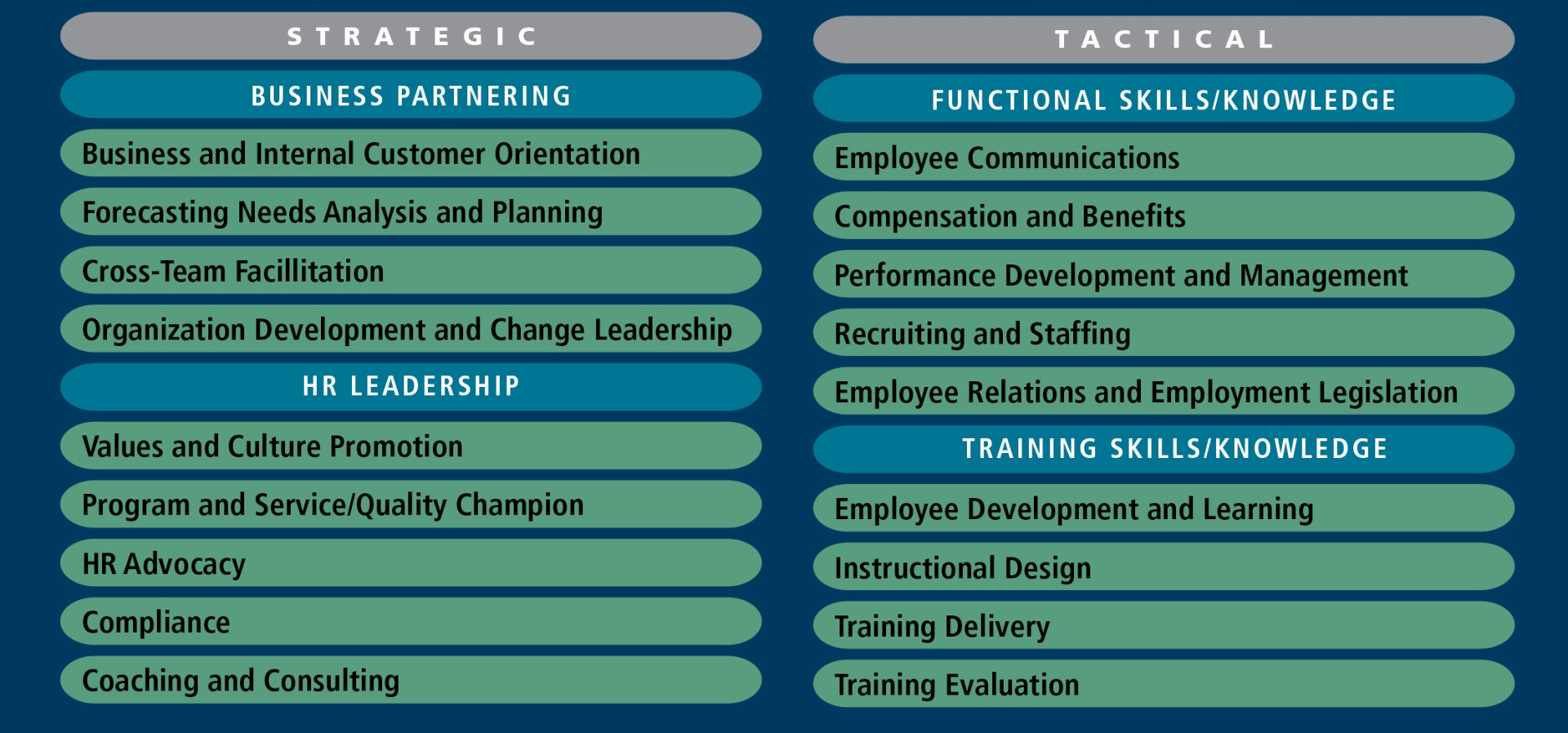
BUSINESS AND INTERNAL CUSTOMER ORIENTATION
From Workitect’s Competency Model for Global Human Resources Professionals
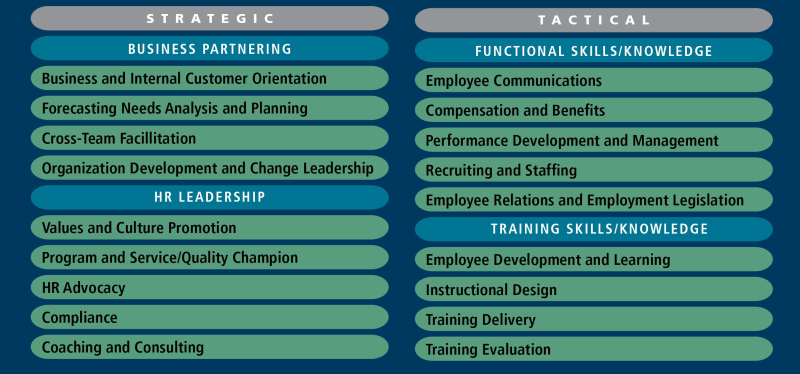
Competency Model for Global HR Professionals
Definition of the BUSINESS AND INTERNAL CUSTOMER ORIENTATION Competency
Ensures Human Resources activities are in keeping with philosophical and operational initiatives of the organization; takes a lead role in the achievement of business objectives and strategies; ties Human Resources objectives with business and financial objectives; shows others the value of people.
An employee demonstrating this competency:
HR’s link to the organization
- Identifies synergies between HR and other departments.
- Links HR to the organization’s culture, mission, goals and values.
- Aligns and integrates all Human Resources strategies with the corporate/functional strategies and operational initiatives of the organization.
HR as a strategic partner
- Demonstrates how HR affects the organization’s bottom line.
- Explains to management the value HR brings to the organization.
- Educates business partners to have an integrated, systematic, comprehensive and visible long term commitment to people.
- Plays a clear and visible role in management.
- Acts as a liaison between departments, management, and key stakeholders.
Strategic problem solving
- Solves HR problems through reasoning and analytical skills.
- Offers HR solutions to personal, departmental and organizational problems using applicable resources.
- Analyzes and brainstorms to create developmental and/or change initiatives for customer.
- Encourages customers to envision the future impacts and outcomes of their decisions.
Internal customer relationship management
- Assumes the viewpoint of the customer and adopts customer problems as one’s own problems.
- Ensure flexibility in assuming different roles for different customers.
- Engages customers on an emotional and intellectual level.
- Maintains a neutral standpoint in customer disputes.
- Manages and closely monitors customer expectations and changing needs and updates approaches based on feedback.
- Restates customer concerns in simple and easily understood terms.
- Works with customers on identifying multiple alternative solutions to common issues.
Importance of This Competency
The potential for Human Resources to play a vital business role has, on occasion, been underestimated. In developing the Human Resources competency model, we were conscious of making sure that the Human Resources function is seen as an equal business partner in the running of an organization.
This competency, the first strategic competency of four under the category of Business Partnering, therefore positions the Human Resources function in its critical partnering role in helping the organization to achieve its business and financial objectives, by aligning Human Resources initiatives with those of the firm and by demonstrating and reinforcing the value of our people.
General Considerations in Developing This Competency
The best way to develop this competency is to become interested in and involved with the other operating departments, the internal customers of Human Resources, and to begin to demonstrate ways in which strategic involvement of Human Resources as part of the planning process can add value to their operations. By making yourself valuable to your internal customers, you will be able to influence decisions at a higher level, to the benefit of the operation and our people.
Practicing This Competency
As a Team Member:
- Look for synergies between this and other departments – how can you work together for the better outcome of everyone involved.
Resource Guide for Developing Global HR Competencies
- Look for ways to align any activities in Human Resources with corporate and unit strategies, and with the ongoing initiatives of operating departments.
- Use every opportunity to explain the value of people in terms of the other person’s operation and their financial and operational goals.
- Be visible in the departments and be ready to get involved where necessary.
- Think of yourself as a consultant and do what you can to learn about the workings of the departments of your internal customers – an informed and educated consultant is a valuable and sought-after consultant!
- Be prepared to recommend change and offer solutions, and be ready to challenge the solutions of your internal customers if they have avoidable, negative outcomes in the future.
- Treat your internal customer with as much care and with as much interest as the organization treats its external customer – be prepared to listen and learn and adjust your communication strategy according to each person.
- Be ready to play the liaison role between departments, providing an objective and fair assessment of situations, wherever possible from the point of view of the people you are working with.
As a Team Leader:
- Ensure that you represent the strengths of your team in the best light at meetings and when interacting with internal customers at a high level.
- Encourage your team members to build relationships with key people in other departments that are based on trust and mutual respect.
- Help to develop integrity in each of your team members, so that internal customers actively seek out you and your team members to help them solve problems (and more importantly, plan to prevent them in the first place!).
- Look for ways to involve members of your team in other departments (e.g. in planning meetings, during restructuring, in work reorganization, etc.).
- Be ready to proactively address potential problem situations before they become bigger problems.
- Constantly seek out feedback from internal customers to evaluate how Human Resources is doing in terms of servicing its internal customer needs (use feedback from the Employee Opinion Survey as a starting point).
- Talk about the value of people in terms of the financial, business and operational goals of the organization – good Human Resources practices = good business sense!
Obtaining Feedback:
- Prepare a set of goals for your own work or for your HR team. Show the goals to someone whose judgment you respect. Ask if the goals represent the right balance between being challenging and being achievable.
- Share your goals with other department heads. Do your goals help accomplish their goals? If they do not, how can yours be modified to better align with their goals?
- Periodically meet with your key internal customers to review the service you have been providing and identify ways to improve it.
- Periodically survey your internal customers to learn how satisfied they are with your department’s service. Create a survey that includes both quantifiable ratings and open-ended questions.
- Identify what work processes or assignments are currently hindering your department’s ability to provide excellent service to its customers.
- Develop ideas for changing the work processes or assignments and discuss them with your internal customers.
Learning from Experts
- Interview someone who has achieved impressive results. This could be someone at your hotel or someone at another hotel, someone in HR or in another department. Ask this person what he/she does to achieve results. Ask the person to describe in detail what he/she did to achieve one or two impressive results. Ask about planning, setting goals, and dealing with obstacles.
- Interview individuals with a reputation for providing excellent service to their internal customers. Find out what these individuals did to improve their service to their customers.
Coaching Suggestions for Managers
If you are coaching someone who is trying to develop this competency, you can:
- Model this competency by publicly setting challenging but achievable goals for your department. Demonstrate the alignment with the firm’s strategies.
- Ask the person to prepare a set of personal work-related goals for the next 3-6 months. Review the goals with this person and provide feedback and suggestions. Set up a procedure for the person to regularly meet with you or keep you informed about progress toward the goals.
- Provide assignments that involve having the person work closely with someone who is strong in achieving quantifiable business results.
- Provide feedback and suggestions to help improve internal customer service.
- Demonstrate through your own actions a commitment to providing excellent service.
- Ask this person what you can do to enable him/her to do a better job of focusing on internal customer service.
- Observe this person in interactions with key internal or external customers and provide specific, constructive feedback.
- Recognize and reward behavior that demonstrates a commitment to internal customers.
Sample Development Goals
- By January 16, I will prepare a set of personal work-related goals for the first quarter and review these goals with my manager.
- By February 1, I will develop 3-6 key measures of my work progress. I will plot each of these measures on a graph displayed in my office.
- By March 4, I will ensure that the Service Excellence Team that I lead has developed a set of goals for the second quarter and an action plan with specific tasks, milestones, and accountabilities. By June 30, the team will meet all of its goals.
- By February 15, I will meet with each of my department’s 5 key internal customers. I will ask how satisfied they are with the service we are providing and what we can do to improve it.
- By March 8, I will meet with Lila Welch to learn what her department has done to provide excellent service to its internal customers. From this conversation, I will develop a list of specific ideas to consider for application in my department.
- By April 30, I will complete a self-study course in customer service skills and identify a list of ideas to apply in my own department.
External Resources
Books, Reports, and Research
- Achieving Desired Business Results, by Ed.D. Tony O’Driscoll, Intl Society for Performance Improvement, 1999. ISBN: 189028906X
- Business Decisions, Human Choices: Restoring the Partnership Between People and Their Organizations, by Lloyd C. Williams, Quorum Books, 1996. ISBN: 156720015X
- The Collaboration Challenge, by James E. Austin, John C. Whitehead, Frances Hesselbein, Jossey-Bass, 2000. ISBN: 0787952206
- Creating a Learning and Development Strategy: The HR Business Partner’s Guide to Developing People, by Andrew Mayo, 2004
- Delivering Results: A New Mandate for Human Resource Professionals, by Dave Ulrich (Editor), Harvard Business School Press, 1998. ISBN: 0875848699
- Execution: The Discipline of Getting Things Done, by Larry Bossidy, Ram Charan, Charles Burck, Crown Publishing, 2002. ISBN: 069610570.
- Getting Results: Five Absolutes for High Performance, by Clinton O. Longenecker, Jack L. Simonetti, Jossey-Bass, 2001. ISBN: 0787953881
- Good to Great: Why Some Companies Make the Leap…and Others Don’t, by Jim Collins, HarperCollins, 2001. ISBN: 0066620996 Human Resource Business Partner: Becoming a HRBP: From HR generalist to strategic Partner, by Nia Chase, 2023
- Human Resources Business Partner, by Human Resources Business Partner Publishing, 2023
- The HR Business Partner Handbook: A Practical Guide to Being Your Organization’s Strategic People Expert, by Glenn Templeman, 2021
- Human Resources As Business Partner: How to Maximize the Value and Financial Contribution of HR, by Tony Miller, 2017
- Human Resource Management: Global Strategies for Managing a Diverse Workforce, by Michael Carrell, Norbert Elbert, Prentice Hall, 1995. ISBN: 0023195339
- The HR Scorecard: Linking People, Strategy, and Performance, by Brian Becker, Mark Huselid, David Ulrich, Harvard Business School Press, 2001. ISBN: 1578511364
- Internal Customer Care: Techniques to Deliver High Quality Service and Build Strategic Partnerships Within Organizations, by Edward Hubbard, Global Insights, 1990. ISBN: 1883733111
- Internal Relationship Management: Linking Human Resources to Marketing Performance, by Michael Hartline, David Bejou, Routledge, 2004. ISBN: 9780203050552
- Managing Your Internal Customers: The Key to Getting Better Results, by Kevin Thomson, Financial Times/Pitman Publishing, 1993. ISBN: 027360161X
- A New Vision for Human Resources: Defining the Human Resources Function by Its Results, by Jac Fitz-Enz, Jack J. Phillips, Crisp Publications, 1998. ISBN: 156052488X
- People: Exceeding the Expectations of Your Internal and External Customers: A Value Focused Customer Care System, by Carl Henry, Henry Associates Press, 1997. ISBN: 0965762602
- The Practical HR Business Partner: A Guide to Creating Highly-Engaged & High Performing Organizations That Achieve Extraordinary Results, by K. A. Reynolds, 2021
- Re-inventing HR – Changing Roles to Create the High-Performance Organization, by Margaret Butteriss (Editor), John Wiley, 1998. ISBN: 0471642479
- The ROI of Human Capital: Measuring the Economic Value of Employee Performance, by Jac Fitz-Enz, AMACOM, 2000. ISBN: 0814405746
- The 2022 HRBP Report: A Qualitative Research Summary about the HR Business Partner Role, by Gary A. DePaul, 2022
- Satisfying Internal Customers First!: A Practical Guide to Improving Internal and External Customer Satisfaction, by Richard Chang, Chang Associates, 1994. ASIN: 1883553040
- So You Want a Seat at the Table: A Practical Guide to Being a True HR Business Partner, by Jeanne Kerr, 2016
- The Stakeholder Strategy: Profiting from Collaborative Business Relationships, by Ann Svendsen, Berrett-Koehler Publishing, 1998. ISBN: 1576750477
- Strategic HRM, by Michael Armstrong, Angela Baron, CIPD Publishing, 2002. ISBN: 0852929234
- The Strategic Human Resource Leader: How to Prepare Your Organization for the Six Key Trends Shaping the Future, by William Rothwell, Robert Prescott, Maria Taylor, Davies-Black Pub, 1998. ISBN: 0891061223
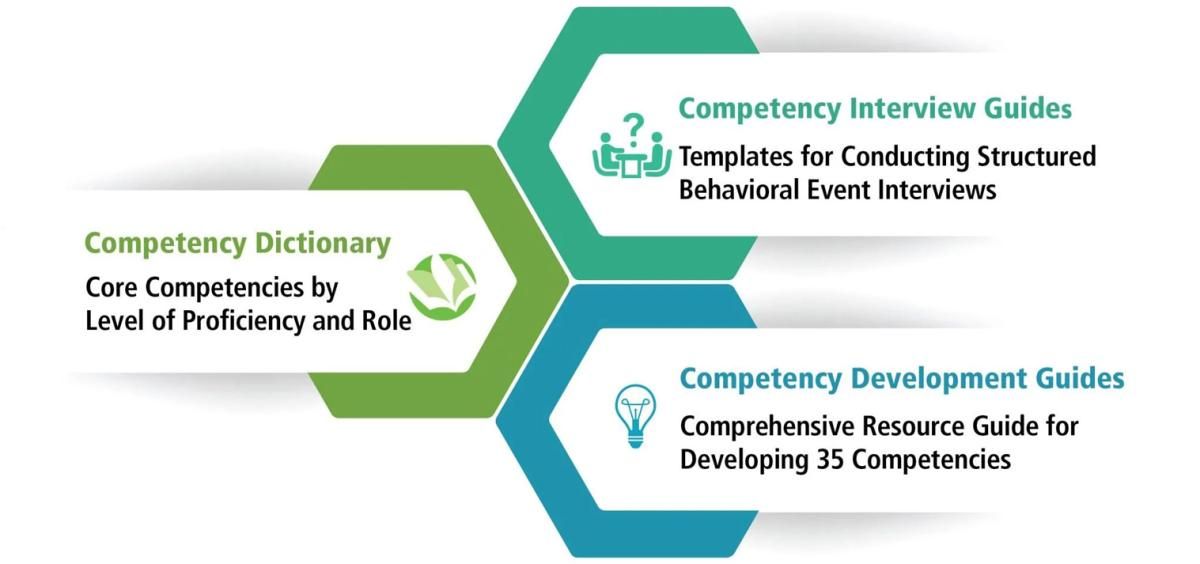
The Competency Bundle: An Integrated Set of Competency-Based Talent Management Tools

To learn more about our products and services, and how competencies and competency models can help your organization, call 800-870-9490 or use the contact form at Workitect.

Leave A Comment